
A few months ago, I got a call from my bank. “There is a problem with your credit card, and you need to take action immediately,” they said. I trusted the phone number since it was saved in my contacts. The tone sounded professional. Still, I decided to be cautious and call my bank, which told me this was fraud – which I almost fell for despite my experience in financial fraud.
In CGAP’s 2022 global review of available data on the evolution of digital financial services (DFS) consumer risks, we concluded that fraud was a fast-growing risk for DFS users, together with data misuse. Our more recent desk research tells a similar story. However, measuring the scale of fraud remains difficult, with definitions and methodologies varying widely across contexts. This variation makes it challenging to get a precise idea of the scale of the risk and its evolution. With that said, the limited data available and reported perceptions of financial sector actors show an unprecedented sense of urgency that must be addressed.
The surging scale of global financial fraud
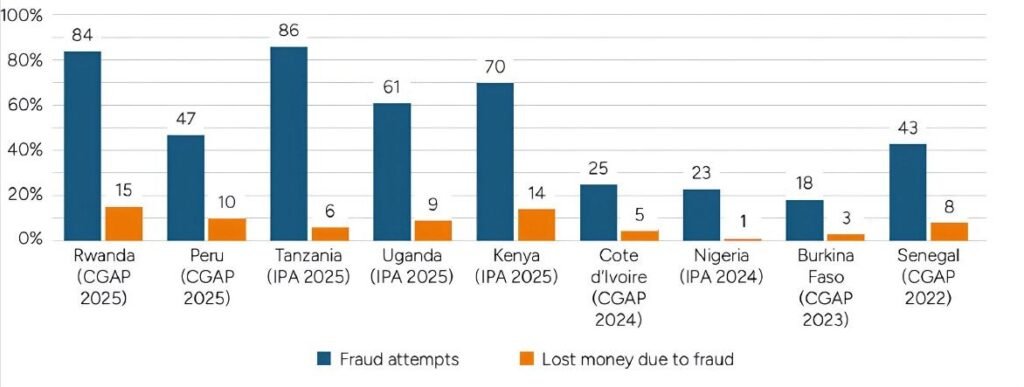
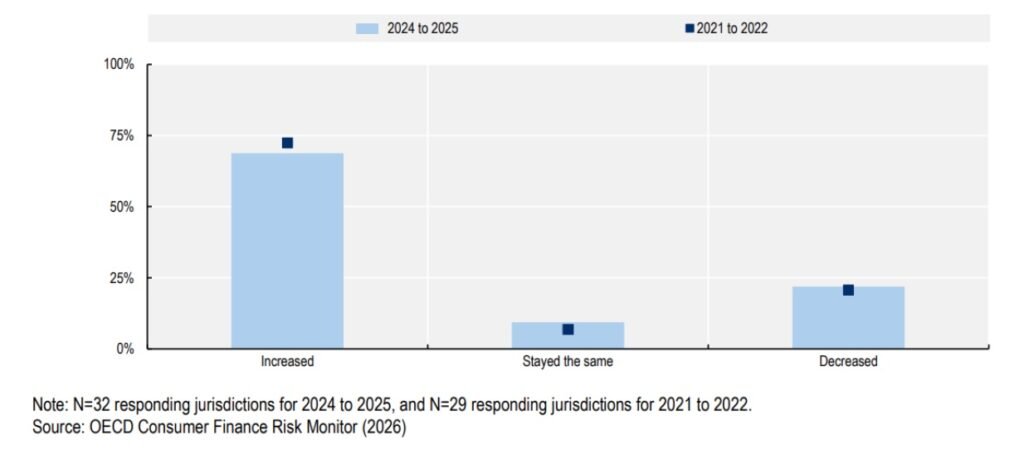
The 2026 OECD Consumer Finance Risk Monitor survey shows that close to 70% of the 60 jurisdictions that responded saw an increase in fraud and scams between 2024 and 2025. This data is consistent with a 2025 World Bank survey of financial sector authorities in 30 countries reporting that 59% consider fraud as the top consumer risk concern, causing a major supervisory challenge. Industry estimates from Nasdaq Verafin suggest global fraud losses rose from roughly USD $486 billion in 2023 to $579 billion in 2025, including $62 billion in losses from scams, with annualized growth of 19%. Data from the Global Anti-Scam Alliance also show alarming data. At a more granular level, nine national surveys conducted by CGAP and IPA confirm large-scale exposure of digital finance users to fraud.